
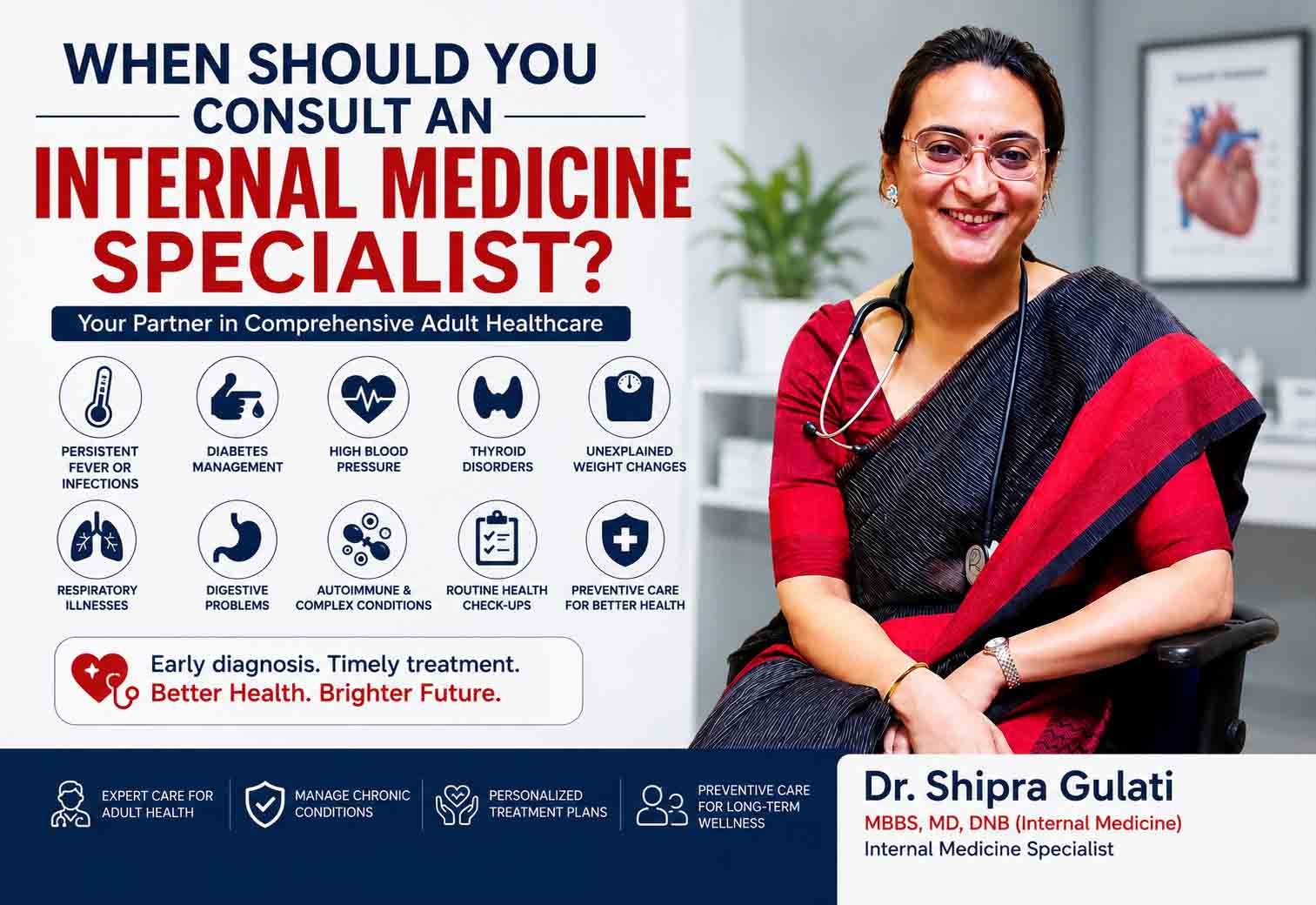
Many people visit a doctor only when they feel seriously ill, but not every health concern requires a specialist in surgery or a specific organ. An Internal Medicine Specialist, also known as an Internist, is trained to diagnose, treat, and prevent a wide range of adult medical conditions. From managing chronic diseases like diabetes and hypertension to evaluating unexplained symptoms, an internist plays a vital role in maintaining overall health.
If you're wondering when it's time to consult an Internal Medicine Specialist, this guide by Dr. Shipra Gulati, MBBS, MD, DNB (Internal Medicine) will help you understand the situations where expert medical care can make a significant difference.
An Internal Medicine Specialist is a physician who specializes in the prevention, diagnosis, and treatment of diseases affecting adults. They are trained to manage simple as well as complex medical conditions involving multiple organ systems.
Unlike general practitioners, internists have advanced training in handling chronic illnesses, infectious diseases, metabolic disorders, and complex health issues that require comprehensive evaluation.
If you have a fever that lasts for several days or experience frequent infections, it may indicate an underlying medical condition that requires detailed evaluation.
An internist can diagnose conditions such as:
Early diagnosis helps prevent complications and ensures appropriate treatment.
Diabetes requires lifelong monitoring and proper medical supervision.
Consult an Internal Medicine Specialist if you:
Regular follow-ups help protect the heart, kidneys, eyes, and nerves.
Hypertension often develops without noticeable symptoms but can significantly increase the risk of heart attack and stroke.
You should seek medical advice if:
Proper treatment can greatly reduce cardiovascular risks.
Symptoms of thyroid disorders are often overlooked.
Consult an Internal Medicine Specialist if you experience:
Early diagnosis helps restore hormonal balance and improve quality of life.
Sudden changes in body weight may be associated with:
An internist can identify the underlying cause and recommend appropriate treatment.
High cholesterol often has no symptoms but increases the risk of heart disease.
Medical evaluation is recommended if you have:
Lifestyle modifications combined with appropriate treatment can significantly improve long-term health.
Consult an Internal Medicine Specialist if you experience:
Timely diagnosis helps prevent chronic lung complications.
Persistent digestive symptoms should never be ignored.
Seek medical advice if you have:
Proper evaluation helps identify the root cause and ensures effective treatment.
Some illnesses affect multiple organs simultaneously and require comprehensive medical management.
Internal Medicine Specialists diagnose and manage:
Their holistic approach ensures coordinated and personalized care.
You don't need to be sick to visit a physician.
Regular health check-ups help:
For better sleep:
Preventive healthcare can reduce the risk of serious illnesses in the future.
Book an appointment with an Internal Medicine Specialist if you experience:
Early diagnosis often leads to better treatment outcomes.
During your visit, the doctor may:
The goal is to provide comprehensive care tailored to your individual health needs.
Choosing an Internal Medicine Specialist offers several advantages:
Dr. Shipra Gulati, MBBS, MD, DNB (Internal Medicine), is committed to delivering compassionate, patient-centered, and evidence-based healthcare. She specializes in the diagnosis and management of diabetes, hypertension, thyroid disorders, infectious diseases, metabolic disorders, respiratory illnesses, gastrointestinal conditions, and complex multisystem diseases.
Her focus on accurate diagnosis, preventive healthcare, and individualized treatment plans helps patients achieve better health outcomes and long-term wellness.
An Internal Medicine Specialist is often the first point of contact for adults dealing with acute illnesses, chronic diseases, or unexplained symptoms. Seeking timely medical advice can prevent complications, improve quality of life, and ensure better long-term health.