Diabetes is one of the fastest-growing health concerns worldwide. Millions of people live with diabetes without realizing they have it because the early symptoms are often subtle and easy to overlook. When left untreated, diabetes can lead to serious complications affecting the heart, kidneys, eyes, nerves, and blood vessels.
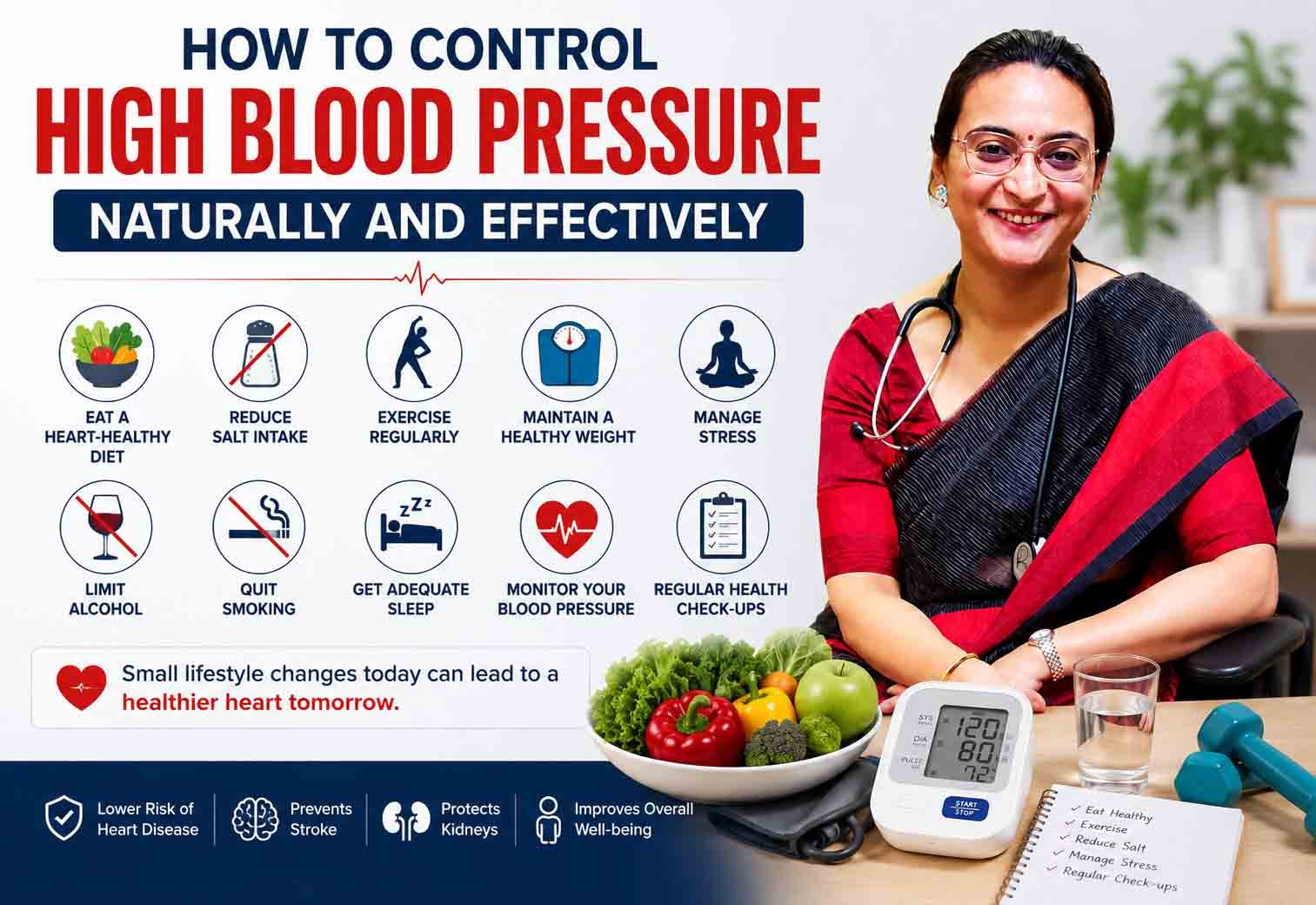
The good news is that many cases of high blood pressure can be managed effectively through healthy lifestyle changes and preventive measures. In this article, Dr. Shipra Gulati, MBBS, MD, DNB (Internal Medicine), explains practical and evidence-based ways to control high blood pressure naturally and improve overall cardiovascular health.
Blood pressure is the force exerted by circulating blood against the walls of the arteries. A normal blood pressure reading is generally around 120/80 mmHg. When blood pressure consistently remains above normal levels, it is classified as hypertension.
If left untreated, hypertension can damage blood vessels and vital organs over time.
Uncontrolled hypertension can increase the risk of:
Early detection and proper management are essential to prevent these complications.
Excess sodium is one of the leading contributors to high blood pressure. Consuming too much salt causes the body to retain water, increasing pressure on blood vessel walls.
Tips to reduce salt intake:
Even a moderate reduction in sodium intake can significantly improve blood pressure levels.
A balanced diet plays a crucial role in blood pressure management.
Include:
Limit:
The DASH (Dietary Approaches to Stop Hypertension) diet is widely recommended for people with high blood pressure.
Excess body weight puts additional strain on the heart and blood vessels.
Benefits of weight loss include:
Even losing 5–10% of body weight can produce meaningful health benefits.
Physical activity strengthens the heart and improves blood circulation.
Aim for:
Regular exercise can help lower both systolic and diastolic blood pressure naturally.
Chronic stress may contribute to elevated blood pressure levels.
Healthy stress-management techniques include:
Reducing stress supports both physical and mental well-being.
Excessive alcohol intake can raise blood pressure and increase the risk of cardiovascular disease.
Recommendations include:
Moderation is key to maintaining healthy blood pressure levels.
Smoking damages blood vessels and significantly increases the risk of hypertension, heart attack, and stroke.
Benefits of quitting smoking include:
Every smoke-free day contributes to long-term health improvement.
Poor sleep quality is associated with higher blood pressure levels.
For better sleep:
Good sleep is essential for heart health and blood pressure regulation.
Regular monitoring helps identify changes early and allows timely intervention.
People with hypertension should:
Home blood pressure monitoring can be an effective part of hypertension management.
Several health conditions can contribute to high blood pressure, including:
Managing these conditions effectively can improve blood pressure control and overall health outcomes.
Consider incorporating:
These foods contain nutrients such as potassium, magnesium, and fiber that support healthy blood pressure levels.
Consult a physician if you experience:
Early evaluation can help prevent serious complications and ensure appropriate treatment.
In some individuals with mild hypertension, lifestyle modifications may significantly improve blood pressure levels. However, many patients require medications along with healthy lifestyle changes to achieve optimal control.
Never stop prescribed blood pressure medications without consulting your doctor.
High blood pressure is a common but manageable condition. Simple lifestyle modifications such as reducing salt intake, exercising regularly, maintaining a healthy weight, managing stress, and following a nutritious diet can make a significant difference in blood pressure control.
Regular health check-ups and early intervention remain the most effective strategies for preventing complications related to hypertension. If you have high blood pressure or are at risk of developing hypertension, seek professional medical guidance to develop a personalized treatment plan.