Diabetes is one of the fastest-growing health concerns worldwide. Millions of people live with diabetes without realizing they have it because the early symptoms are often subtle and easy to overlook. When left untreated, diabetes can lead to serious complications affecting the heart, kidneys, eyes, nerves, and blood vessels.
Recognizing the warning signs early can help ensure timely diagnosis and treatment, preventing long-term health complications. In this article, Dr. Shipra Gulati, MBBS, MD, DNB (Internal Medicine), explains the most common warning signs of diabetes that should never be ignored.
Diabetes is a chronic medical condition in which the body either does not produce enough insulin or cannot effectively use the insulin it produces. This results in elevated blood sugar levels that can damage various organs over time.
The most common types include:
Early diagnosis and proper management are essential to maintaining good health and preventing complications.
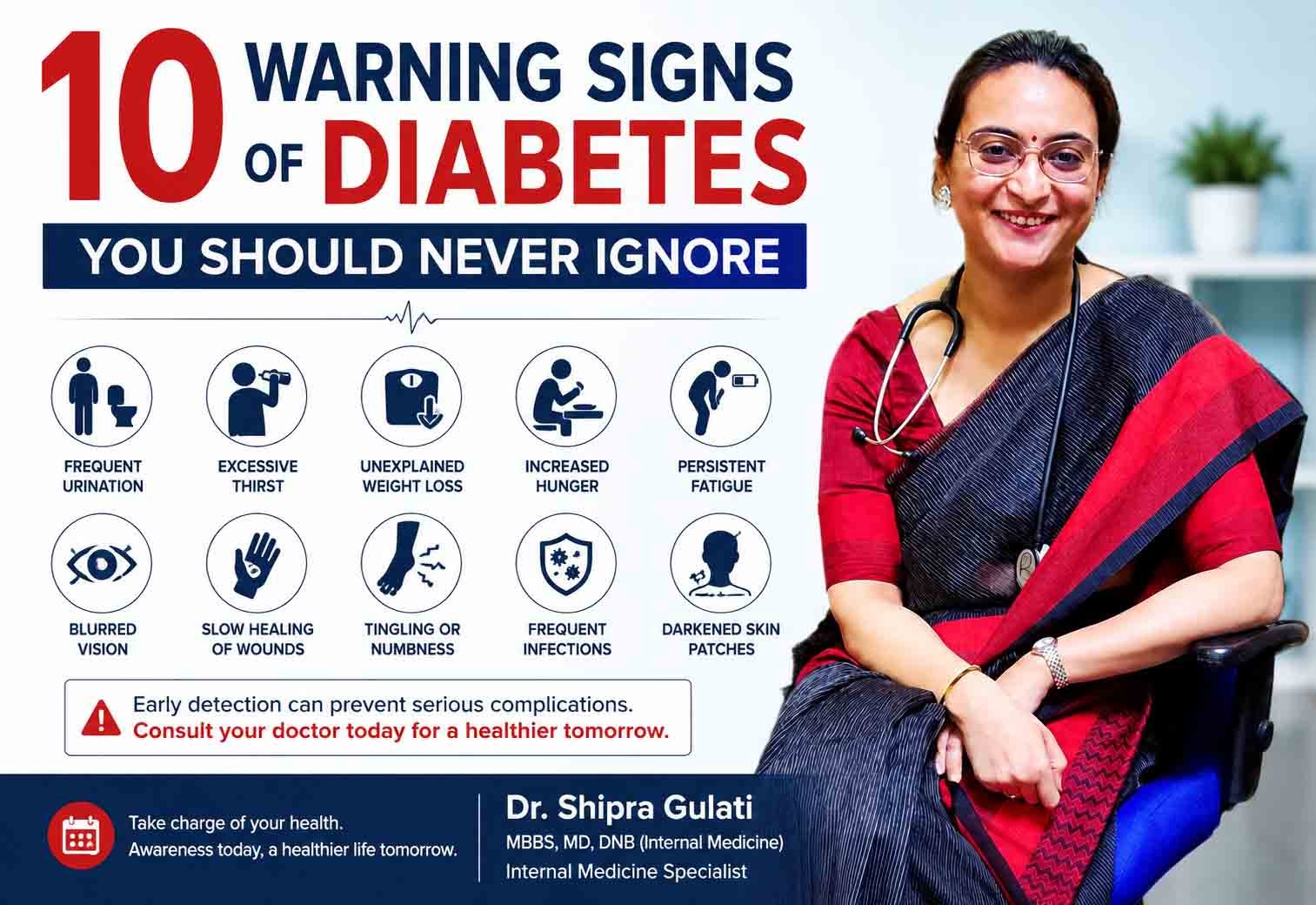
One of the earliest and most common signs of diabetes is frequent urination. High blood sugar forces the kidneys to work harder to remove excess glucose from the bloodstream, resulting in increased urine production.
You may notice:
As the body loses more fluids through frequent urination, dehydration develops, causing excessive thirst.
Warning signs include:
Persistent thirst should never be ignored, especially when accompanied by frequent urination.
Losing weight without changes in diet or exercise may indicate uncontrolled diabetes.
When the body cannot utilize glucose effectively, it begins breaking down fat and muscle for energy, resulting in unexpected weight loss.
Consult a doctor if you experience:
Despite eating regular meals, people with diabetes often feel hungry because their cells are unable to utilize glucose properly.
Common symptoms include:
When glucose cannot enter the cells efficiently, the body's energy levels decline.
Signs include:
Chronic fatigue may indicate underlying blood sugar abnormalities.
High blood sugar levels can affect the lenses of the eyes, leading to temporary vision changes.
Symptoms may include:
Untreated diabetes can eventually lead to diabetic retinopathy, a serious eye condition that may cause vision loss.
People with diabetes often experience delayed wound healing because elevated blood sugar affects circulation and immune function.
Watch for:
Slow-healing wounds require prompt medical attention.
High blood sugar can damage nerves, leading to diabetic neuropathy.
Symptoms include:
Early treatment can help prevent permanent nerve damage.
Elevated blood sugar creates an environment where infections can develop more easily.
Common infections include:
Frequent infections may be an early sign of undiagnosed diabetes.
A condition called Acanthosis Nigricans may develop in people with insulin resistance and diabetes.
These patches often appear:
The skin may become darker, thicker, and velvety in texture.
You may have a higher risk if you:
Regular health screenings are essential for early detection.
Consult an Internal Medicine Specialist if you experience:
Early diagnosis can significantly reduce the risk of complications and improve long-term health outcomes.
Your doctor may recommend:
These tests help determine blood sugar levels and confirm a diagnosis.
Although not all forms of diabetes can be prevented, lifestyle modifications can significantly reduce the risk of Type 2 Diabetes:
Diabetes often develops gradually, making it easy to overlook the early warning signs. Symptoms such as excessive thirst, frequent urination, fatigue, blurred vision, unexplained weight loss, and recurrent infections should never be ignored. Early diagnosis and timely treatment can prevent serious complications and help maintain a healthy, active life.
If you are experiencing any symptoms of diabetes or have risk factors for the condition, consult Dr. Shipra Gulati, MBBS, MD, DNB (Internal Medicine) for expert evaluation, diagnosis, and personalized diabetes management.
Book your consultation today and take the first step toward better health and blood sugar control.